

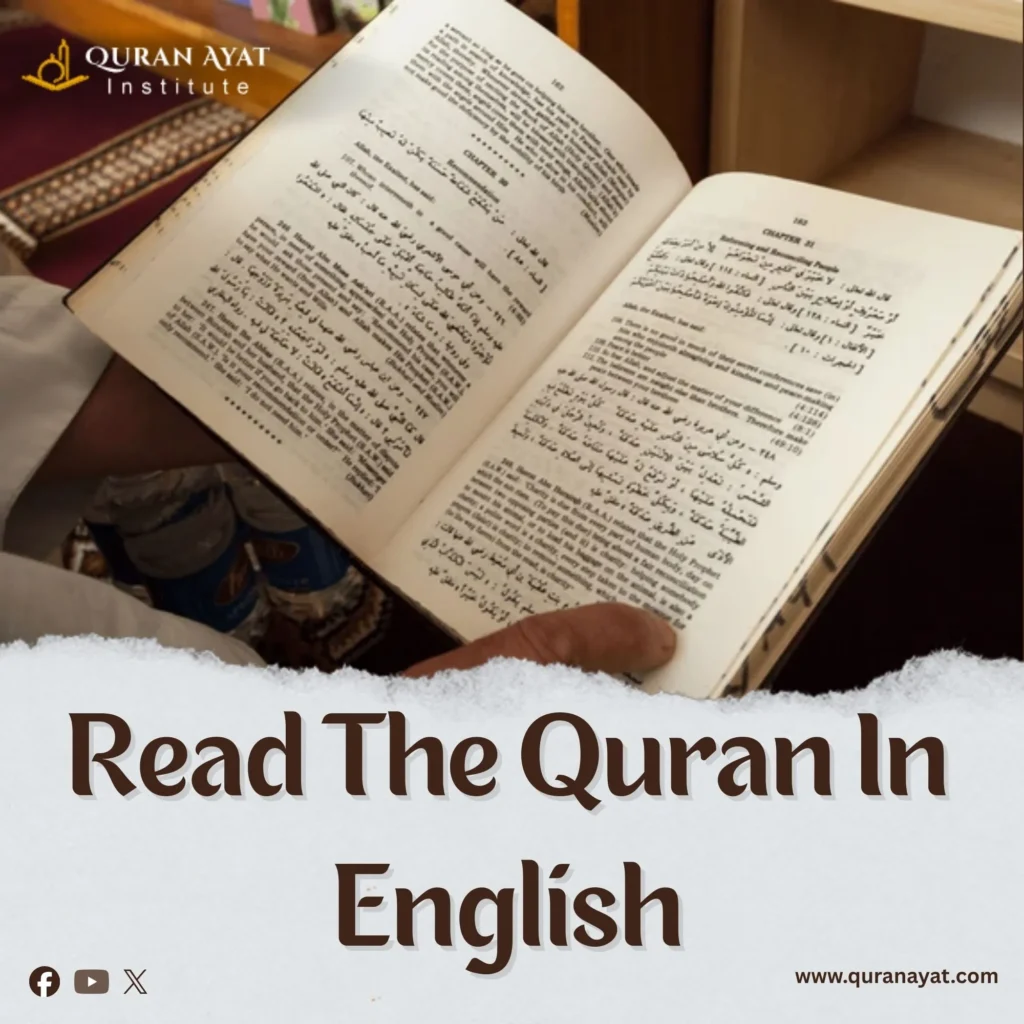
10 Essential Tips for Reading the Quran in English
1. Select a Contemporary Translation
When starting to read a text, particularly religious or historical works, it’s important to select the right translation. Avoid translations using archaic “King James” English like “thee” and “thou.” This outdated language creates unnecessary mental barriers that make the Quran’s message much harder to understand.
Instead, consider modern translations that emphasize clarity and flow, such as The Clear Quran or the translation by M.A.S. Abdel Haleem, which are designed to be more accessible for contemporary readers.
2. Understand the “Surah” Structure
The Quran’s structure is unique because it isn’t a chronological timeline of events; instead, the chapters are generally arranged. For a new reader, starting at the beginning can feel daunting because the first few chapters are long and contain complex legal and social regulations. By understanding that the book is organized by length rather than a narrative sequence, you can navigate the text with more realistic expectations of its flow.
To make your journey easier, start with the final section known as Juz Amma. These shorter chapters at the end of the Quran focus on foundational spiritual themes like the nature of the Creator, the beauty of the universe, and the importance of good character. Because these verses are brief and punchy, they are much easier to digest and provide a quick sense of accomplishment, helping you build a strong spiritual foundation before tackling the longer, more detailed chapters at the front.
3. Pair Translation with Auditory Recitation
The Quran is fundamentally an oral revelation. Even if you are reading the English meaning, listening to the Arabic recitation provides the emotional and rhythmic context that text alone cannot convey. To truly master the connection between the English meaning and the original Arabic beauty, you can enroll in Online Quran Recitation Classes, where expert tutors guide your ears and tongue through the verses.
4. Read the Translator’s Preface
When you read the translator’s introduction, you are essentially learning the “rules of the game” for the specific English version you are holding. Arabic is a language where a single word can have multiple layers of meaning, and a translator must decide whether to provide a literal word-for-word translation or a thematic one that prioritizes the overall message and flow.
The introduction acts as a crucial roadmap, explaining why certain English words were chosen over others and how the translator approached cultural metaphors that don’t have a direct Western equivalent.
By taking ten minutes to read this preface, you avoid the confusion of “misreading” the tone of the text and gain a clearer understanding of the scholarly perspective guiding your study.
5. Utilize Footnotes and Commentary
Many English Qurans include small numbers next to verses that lead to footnotes at the bottom of the page. Never skip these! They often explain the historical context or linguistic nuances that simply cannot be translated into a single English word.
6. Practice “Thematic” Reading
Instead of reading from page 1 to 600, try reading by topic. Use the index at the back of your English Quran to look up subjects like “Patience,” “Justice,” or “The Stories of Moses.” This helps you see how the Quran builds a comprehensive argument across different chapters.
7. Differentiate Between Makki and Madani Verses
Most English translations will label a chapter as “Meccan” or “Medinan.”
- Meccan (Makki): Focus on the soul, the afterlife, and the oneness of God.
- Medinan (Madani): Focus on law, community building, and social justice.
Knowing which one you are reading helps you set your expectations for the content.
8. Keep a Reflection Journal (Tadabbur)
As you read in English, certain verses will stand out. Write them down. Note why they resonated with you and what questions they raised. This turns passive reading into an active dialogue with the text, which is the heart of Islamic contemplation.
9. Read Slowly and Repeatedly
The Quranic style is “elliptical,” meaning it often leaves out details to focus on the moral lesson. If a passage in English seems confusing, read it three times. Often, the meaning becomes clear once you stop looking for a “plot” and start looking for the “message.”
10. Cross-Reference with a Concise Tafsir
A Tafsir acts as a deep-dive commentary that provides the profound intended meaning of a verse. While an English translation provides the literal “what” of a sentence, the Tafsir offers the “why” and “how” by providing historical context and the reasons for revelation.
By consulting a Tafsir when you hit a difficult passage, you protect yourself from misinterpreting the text through the lens of modern biases, ensuring you grasp the verse exactly as it was meant to be understood.
Conclusion
Reading the Quran in English opens the door to a deeper and more conscious connection with your faith. When approached with reflection, proper guidance, and authentic resources, the English translation can become a powerful source of understanding and spiritual growth. For English-speaking Muslims in the USA, UK, Australia, Canada, and other regions, learning with qualified teachers can make this journey clearer and more meaningful. Quran Ayat supports learners through structured programs such as quran classes for kids and quran classes for ladies, helping families and individuals understand the Quran with confidence. The true goal is not just to read the Quran, but to understand its message and allow its guidance to shape everyday life.
