

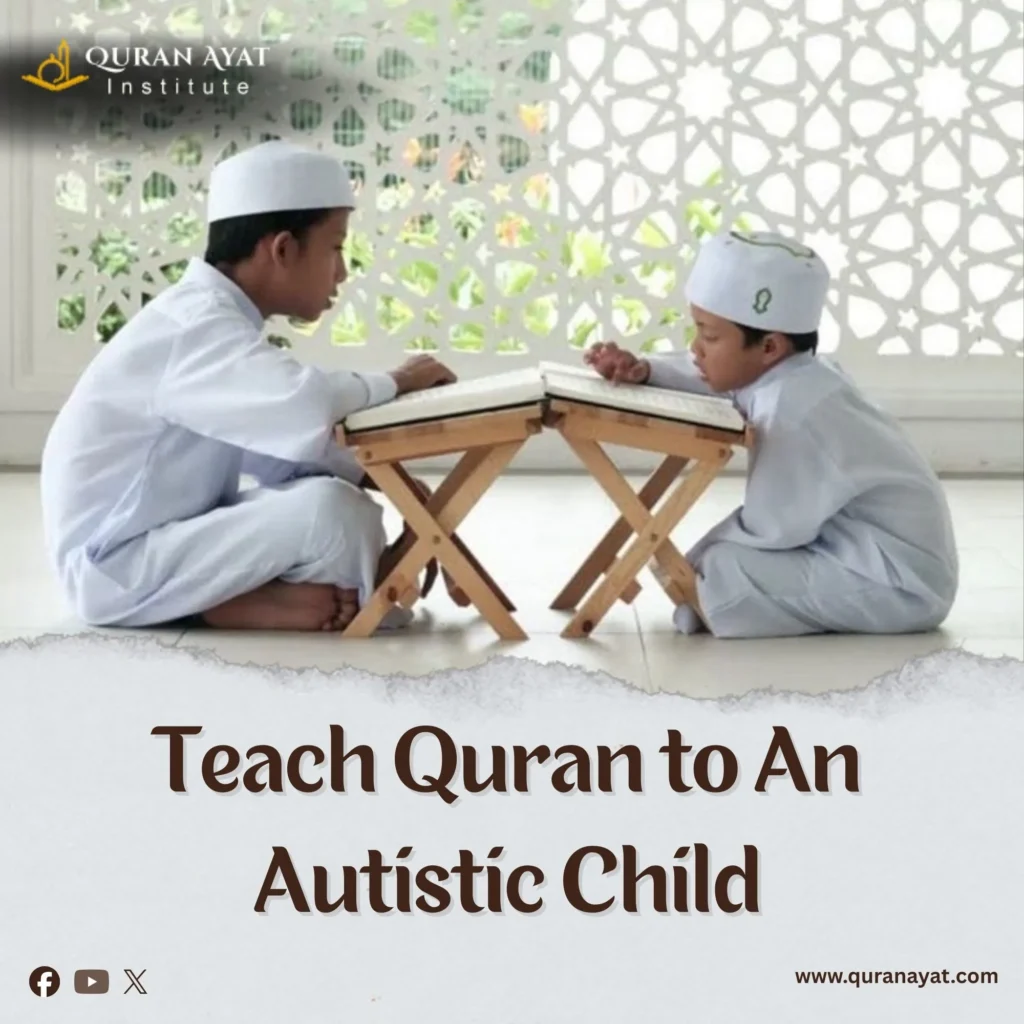
Kids with autism (a neurodevelopmental disorder) face a lot of challenges when it comes to studies. They often struggle with sitting still, processing long verbal instructions, and dealing with sensory overload like bright lights or loud recitation. To teach them the Quran effectively, you must move toward visual structure and sensory breaks. Planning for an autistic child means breaking the Arabic language into physical, touchable, and repeatable patterns that match how their brain actually processes information.
10 Practical Tips to Teach the Quran to an Autistic Child
1. Implement a Visual Schedule
Autistic children often feel anxious when they don’t know when a task will end. Use a simple board with two columns: “First” (Quran) and “Then” (a favorite activity or snack). This gives the child a concrete “finish line” to work toward. Seeing the reward visually helps them regulate their emotions and stay focused on the task at hand. You can find structured, child-friendly lesson plans at Quran Classes for Kids by Quran Ayat.
2. Use Color-Coded Arabic Letters
Many children with Autism Spectrum Disorder (ASD) are visual thinkers and may encounter difficulties when distinguishing between similar-looking shapes, such as the letters Ba, Ta, and Tha. To aid in their recognition of these letters, utilizing highlighters or colored stickers can be an effective strategy. For instance, consistently marking the “dots” of these letters in bright red can create a visual “anchor.” This approach helps the brain to recognize each letter more instantly and reduces confusion caused by their similar appearances.
3. Create a Sensory-Neutral Environment
Before the lesson starts, scan the room for “sensory triggers.” Dim the lights if they are too bright, and ensure there is no background noise like a TV or a loud clock. If the child is sensitive to sound, let them listen to the Quran through noise-canceling headphones at a volume they control. When they feel physically safe, they learn much faster.
4. Use “Micro-Learning” Milestones
When working with children on reading skills, it’s important to avoid overwhelming them with large chunks of text. Instead of asking the child to read an entire page or even a full verse, break the material down into smaller, manageable steps.
Concentrate on one word or even one vowel sound (Haraka) during each session. Achieving mastery over these small segments can significantly enhance the child’s confidence and prevent the feeling of frustration or shutdown that often occurs when faced with larger tasks.
5. Incorporate Stimming and Movement
Many children with autism often require movement such as rocking, hand-flapping, or fidgeting as a means to process information effectively. Instead of insisting that they sit in traditional, still positions, it can be beneficial to allow them to use alternatives like sitting on a yoga ball or holding a fidget spinner while engaging in activities like recitation. This approach, known as “active sitting,” can enhance their ability to concentrate on auditory tasks, such as listening to the Quran, by reducing the struggle to remain motionless.
6. The Echo Recitation Technique
Explaining the rules of Tajweed can often be overwhelming. Instead, consider using a straightforward “I say, You say” approach. Begin by reciting a single word with the correct rhythm, then pause for the child to repeat it back. This method eliminates the need for complicated verbal instructions and taps into the child’s innate ability to mimic sounds and patterns.
7. Use Tactile Letter Tracing
Move the lesson off the paper and into the hands. Use sand trays, play-dough, or sandpaper letters. Have the child trace the shape of the Alif or Ba with their finger while saying the sound. Combining touch with sound creates a “multi-sensory” memory that is much harder to forget than just looking at a book.
8. Be Direct and Literal
When explaining the meaning of a Surah, avoid metaphors or “flowery” language. Autistic children are often very literal. If you are teaching Surah Al-Fil, show them a high-quality photo or a toy elephant. Use concrete terms: “The elephant is big,” “The birds are small.” This makes the Quranic stories real and relatable rather than confusing.
9. Use a Visual Timer
An abstract 10 minutes means nothing to a child who struggles with time perception. Use a sand timer or a visual countdown app where the red disappears as time goes by. This allows the child to see exactly how much work is left, which significantly reduces the likelihood of a meltdown toward the end of the lesson.
10. Celebrate Success with Special Interests
If the child is obsessed with cars, use car stickers for their progress chart. If they love space, tell them they are launching into the next Ayah. Integrating their natural passions into the Quran lesson makes them feel seen and understood, turning the teacher into an ally rather than just an instructor.
Conclusion
Teaching a child with autism is a journey of patience that rewards you with unique insights of the child. Use the tips and try to engage kids in the most natural way. Remember, your goal isn’t just to finish the Qaida course; it’s to make the Quran a source of light and comfort for a child whose world can often feel overwhelming.
