Written by Sheikh Adel Rizk (Abu Ahmad), Quran teacher at Quran Ayat
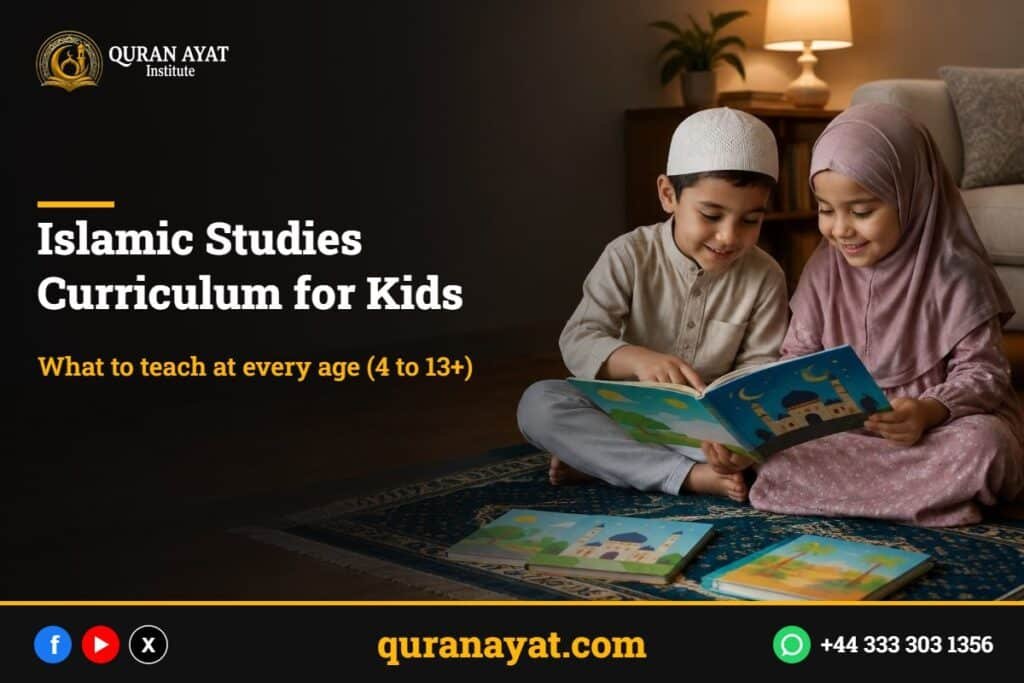
Short answer: A good Islamic studies curriculum for kids grows with age. From 4 to 6, children learn who Allah is, simple duas, the names of the prophets and good manners. From 7 to 9, they learn wudu and salah step by step, the five pillars and the first short hadith. From 10 to 12, they study the seerah, the six pillars of iman, basic fiqh of fasting and purification, and memorize hadith from Imam an-Nawawi’s Forty Hadith. Teens add deeper aqeedah, the meanings of the Quran and how to answer questions about Islam. Our online Islamic classes for kids follow a plan like this, one-to-one, with stories, worksheets and quizzes.
Key Takeaways
- Ages 4 to 6: Allah, the prophets, short duas, manners.
- Ages 7 to 9: wudu, salah, five pillars, first hadith.
- Ages 10 to 12: seerah, pillars of iman, fasting and purity, Forty Hadith.
- 13+: aqeedah in depth, Quran meanings, Islamic identity.
- Teach through stories and daily practice, not only facts.
Why a curriculum matters
Many children abroad learn Quran reading but very little about their deen. They can recite Al-Fatihah but don’t know why we pray, or they know stories but not how to make wudu. A curriculum makes sure nothing important is missed, and that each topic comes at the right age.
Luqman’s advice to his son begins with tawheed: “O my son, do not associate anything with Allah” (Quran 31:13). That is the right order for children too: first who Allah is, then how we worship Him, then how we live.
Age-by-age Islamic studies plan
| Age | Aqeedah (belief) | Worship (fiqh) | Seerah and stories | Hadith and duas | Manners (adab) |
|---|---|---|---|---|---|
| 4 to 6 | Allah is One, the Creator; angels; Jannah | Bismillah, saying salam | Stories of prophets: Adam, Nuh, Ibrahim, Musa | Duas for eating, sleeping, the toilet | Thank you, sharing, honesty |
| 7 to 9 | Six pillars of iman (basic) | Wudu step by step, the 5 prayers, how to pray | The Prophet’s ﷺ childhood and family | First short hadith, morning and evening adhkar | Respect for parents, manners in the masjid |
| 10 to 12 | Names and attributes of Allah (basic), Qadar | Fasting, ghusl, what breaks wudu, zakat basics | The seerah from Makkah to Madinah | Forty Hadith of an-Nawawi (selected) | Speech, friendship, online manners |
| 13+ | Tawheed in depth, answering doubts | Fiqh of puberty, Hajj basics | The Rightly Guided Caliphs, Islamic history | Full Forty Hadith, meanings | Identity, modesty, serving others |
The Prophet ﷺ told parents to teach children salah at seven (Sunan Abi Dawud 495), so wudu and prayer become the central topics from age 7.
We don’t give a young child a full aqeedah course. At the start we teach that Allah is One and that Allah exists, then the basics of taharah (purity). We teach the shahadah and the pillars of Islam, how to make wudu, how to pray, the five daily prayers and how many rak’ahs each one has, and the basics of Hajj and Umrah. And we teach them how to feel khushu’ and the greatness of Allah while they pray, not only the movements.
What our kids’ Islamic classes cover
From our course page, the Islamic classes for kids include:
- Stories of the prophets from the Quran.
- The Forty Hadith of Imam an-Nawawi (text on sunnah.com).
- The pillars of Islam and core beliefs.
- Practical fiqh: wudu, salah and fasting.
- Seerah of the Prophet ﷺ.
- Daily supplications, and tarbiyah and Islamic manners.
- Short surahs with tajweed.
Lessons use stories, audio and video, games, worksheets and quizzes, and parents receive regular progress reports.
How to teach Islamic studies so it sticks
- Story first, rule second. “Prophet Ibrahim broke the idols” teaches tawheed better than a definition.
- Practise the same day. Learn the dua for leaving the house, then say it at the door.
- Short and regular. Two 30-minute lessons a week beat one long monthly class.
- Let them ask. Children’s questions (“Where is Allah?”) are the best lesson plan.
- Be the example. Children copy what they see at home.
Islamic studies and Quran: together or separate?
Both. Quran lessons teach reading, tajweed and memorization; Islamic studies teach what the Quran asks us to believe and do. Many families take Quran 3 times a week and Islamic studies once or twice. For reading and hifz, see our online Quran classes for kids. For duas, there’s a dedicated dua course.
Online or weekend school?
Weekend Islamic schools give community, which matters. But classes are often large, and topics move at one pace for everyone. Online one-to-one lessons let the teacher answer your child’s questions and adjust to their age. Many families use both.
Frequently asked questions
What should a 5-year-old learn about Islam?
That Allah is One and the Creator, short duas, the names of some prophets and good manners.
At what age should children learn to pray?
The Prophet ﷺ said to teach salah at seven. Many children start copying their parents earlier.
What are the main subjects in Islamic studies for kids?
Aqeedah, fiqh of worship, seerah, hadith, duas and Islamic manners.
How many Islamic studies lessons a week does a child need?
One or two 30-minute lessons a week, alongside Quran lessons, works well.
Can non-Arabic speaking children learn Islamic studies?
Yes. Our classes are taught in English by Arab teachers.
Do children get a certificate?
Yes. Students who pass the final test receive a certificate.
Build their deen step by step
A child who knows who Allah is, how to pray and how the Prophet ﷺ lived carries that for life. Follow a plan by age, keep it practical, and let them ask questions. To give your child a teacher for this, join our one-to-one online Islamic classes for kids and book a free trial lesson.
